Loading

We are committed to redefining the construction industry with innovative solutions, cutting-edge technology, and sustainable practices. Our team of experts ensures every project is crafted



Automotive Chip Race Heats Up: High Computing Power Becomes the New Battleground
03 Dec 2025 News
In 2025, the global automotive chip industry sees a computing power race; firms launch high-TOPS chips, with Nvidia leading, while China pushes for 20% localization amid surging ADAS demand.
The global automotive chip industry is witnessing an intense computing power arms race, driven by the popularization of advanced driver assistance systems (ADAS) and the upgrade of intelligent cockpits. According to TrendForce, the global intelligent driving SoC market size reached $5 billion in 2024, a year-on-year increase of 62%, and is projected to expand to $7.6 billion in 2025. With the penetration rate of L2+ autonomous driving exceeding 45% globally, high-computing-power chips have become the commanding height of supply chain competition.
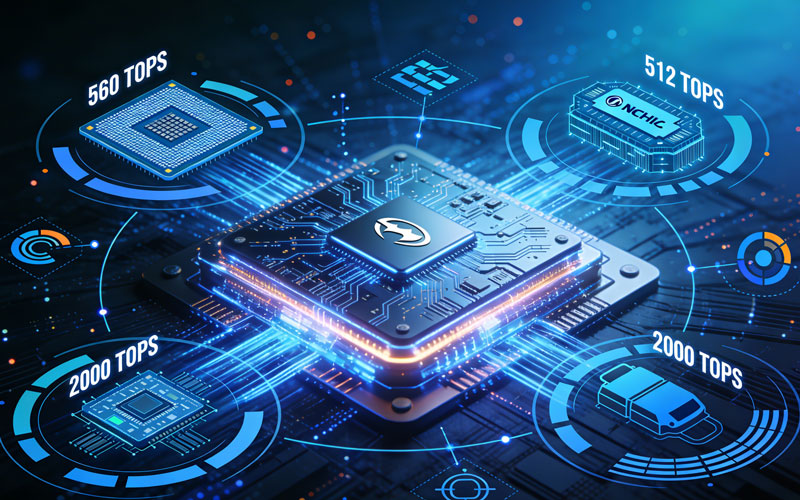
Major players have accelerated the launch of high-performance products in 2025. Horizon Robotics unveiled its Journey 6P chip in April, boasting a single-chip computing power of 560 TOPS, which will be mass-produced in September 2025. CoreEngine Technology launched its "Starlight One (AD1000)" chip in March, adopting a 7nm automotive process with an NPU computing power of 512 TOPS, scheduled for large-scale vehicle installation in 2026. Nvidia's Thor chip, released in early March, contains 77 billion transistors and delivers an astonishing 2000 TOPS of AI computing power, setting a new benchmark in the industry.
The competition has also exposed the industry's pain points. The R&D investment for high-computing-power chips is enormous, and only a handful of enterprises can sustain the pressure. The computing power demand for highway NOA ranges from 100-200 TOPS, while urban NOA requires 500-1000 TOPS, posing higher requirements for process complexity. Currently, Nvidia leads the Chinese market with a 38.63% share, followed by Tesla (23.43%) with its self-developed FSD chips. Domestic firms are catching up, with Huawei and Horizon holding 17.21% and 10.68% of the market, respectively. MIIT has set a goal to raise China's automotive chip localization rate to 20% by 2025, with Dongfeng Motor planning to increase its domestic chip adoption rate to 60% and BYD advancing self-developed chip projects for mid-range models.
Need Any Help
Nees Any Help, Please contact Us
- Work:
- M-F, 09AM -06PM
- Mail Us
- info@fct-elec.com
- Location:
- KWUN TONG, KL, HK