Loading

We are committed to redefining the construction industry with innovative solutions, cutting-edge technology, and sustainable practices. Our team of experts ensures every project is crafted



High-Precision Navigation Modules: Enabling Urban NOA's Large-Scale Application
03 Dec 2025 News
In 2025, high-precision navigation modules (GNSS+RTK+IMU) advance urban NOA; domestic firms cut costs by 40%, fueling mid-range adoption, with China's 2026 market forecast at 35B yuan.
High-precision navigation modules are becoming the core infrastructure for urban NOA's large-scale commercialization, with technological innovations and cost reductions driving their accelerated penetration in mid-to-low-end models. Unlike highway NOA, urban NOA requires centimeter-level positioning accuracy to cope with complex road conditions such as intersections, pedestrians, and non-motorized vehicles, placing higher demands on navigation modules.
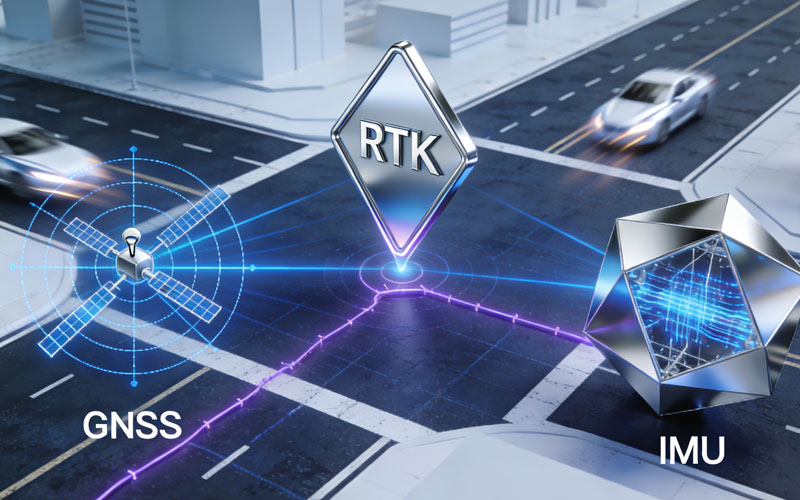
Current high-precision navigation modules mainly adopt the "GNSS+RTK+IMU" fusion scheme. Domestic enterprises have made significant breakthroughs in key technologies: Daoyuan Technology's NAV3120 series modules support multi-frequency multi-constellation GNSS and tight coupling with IMU, achieving positioning accuracy of ±2cm in open areas and maintaining stable positioning for 30 seconds in GNSS-denied environments such as tunnels. Huawei's high-precision navigation module integrates 5G and V2X technologies, enabling real-time data interaction with road infrastructure to improve positioning reliability in complex urban scenarios.
Cost reduction is promoting market popularization. With large-scale production and technological iteration, the cost of high-precision navigation modules has dropped by 40% in 2025 compared to 2023, making them accessible to 150,000-yuan-class models. For example, Weijing Technology's VS919 series modules reduce hardware costs by 40% compared to traditional solutions, lowering the BOM cost ratio from 18% to 11%, helping automakers achieve "zero premium for combined driving assistance functions" in mid-range models. The market size of automotive high-precision navigation modules in China is expected to reach 35 billion yuan in 2026, with a penetration rate exceeding 40% in new passenger vehicles.
Need Any Help
Nees Any Help, Please contact Us
- Work:
- M-F, 09AM -06PM
- Mail Us
- info@fct-elec.com
- Location:
- KWUN TONG, KL, HK