Loading

We are committed to redefining the construction industry with innovative solutions, cutting-edge technology, and sustainable practices. Our team of experts ensures every project is crafted



Chiplet Technology Revolutionizes Automotive Chips: Balancing Performance and Cost
05 Nov 2025 News
In 2025, Chiplet technology revolutionizes automotive chips, adopted by Nvidia, Horizon and Huawei to boost performance, cut costs and shorten R&D cycles, while facing standardization and packaging challenges.
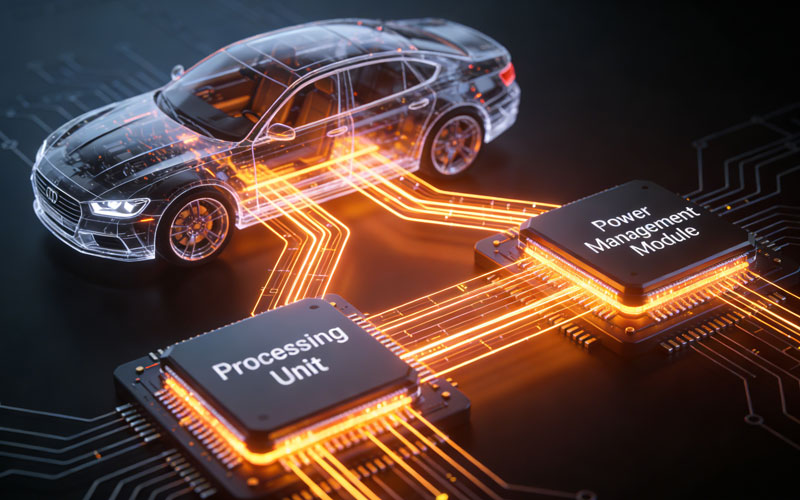
Chiplet (chiplet) technology is emerging as a game-changer in the automotive chip industry, enabling enterprises to balance high performance and low cost by integrating multiple chiplets through advanced packaging, breaking the bottleneck of traditional monolithic chip design.
In 2025, Chiplet technology has been widely applied in high-end automotive chips. Nvidia's Thor chip adopts a Chiplet architecture, integrating GPU, CPU, and NPU chiplets to achieve 2000 TOPS of computing power while reducing development cycles by 18 months. Horizon's Journey 6P chip uses Chiplet technology to combine high-performance computing chiplets and low-power control chiplets, enabling flexible configuration according to automakers' needs. Domestic firms such as Huawei and CoreEngine are also investing heavily in Chiplet R&D, with Huawei's latest in-vehicle chip achieving a 40% improvement in computing density through Chiplet packaging.
Chiplet technology brings multiple advantages to automotive chips: it reduces R&D costs by reusing mature chiplets, shortens time-to-market, and improves yield rates compared to advanced process monolithic chips. For automakers, Chiplet-based chips allow for customized functions, reducing unnecessary computing power waste and lowering overall costs. However, the industry faces challenges such as inconsistent interconnection standards, high packaging costs, and signal integrity issues. MIIT is accelerating the formulation of Chiplet interconnection standards for automotive chips, and leading enterprises are establishing industry alliances to promote technological standardization. As Chiplet technology matures, it is expected to become the mainstream architecture for automotive chips by 2028, driving the industry towards more efficient and flexible development.
Need Any Help
Nees Any Help, Please contact Us
- Work:
- M-F, 09AM -06PM
- Mail Us
- info@fct-elec.com
- Location:
- KWUN TONG, KL, HK